Achieve higher conversions with a Sales Funnel Builder. Learn real-world strategies, optimize stages, and measure ROI for business growth.

When I started my journey in digital marketing over a decade ago, the concept of a sales funnel was often a theoretical framework discussed in boardrooms. Today, it’s a tangible, actionable system, thanks largely to tools known as a Sales Funnel Builder. From small businesses in the US trying to generate their first leads to established enterprises aiming for scalable growth, the ability to visually map, build, and optimize the customer journey has become indispensable. My own experience building hundreds of funnels for clients has shown me that without a structured approach, marketing efforts can quickly become disjointed and inefficient, leaving money on the table.
Key Takeaways:
- A Sales Funnel Builder is crucial for visually mapping and optimizing the customer journey.
- Effective funnel building relies on understanding customer psychology and behavior at each stage.
- Choosing the right platform involves assessing features, ease of use, and integration capabilities.
- Strategic implementation focuses on lead capture, nurturing, conversion, and post-purchase engagement.
- A/B testing and continuous iteration are vital for maximizing conversion rates.
- Measuring key performance indicators (KPIs) like conversion rate and customer lifetime value proves ROI.
- Avoiding common pitfalls like neglecting follow-up or audience research leads to better results.
- Funnels can significantly improve lead quality and revenue predictability for businesses of all sizes.
Understanding Your Customer Journey with a Sales Funnel Builder
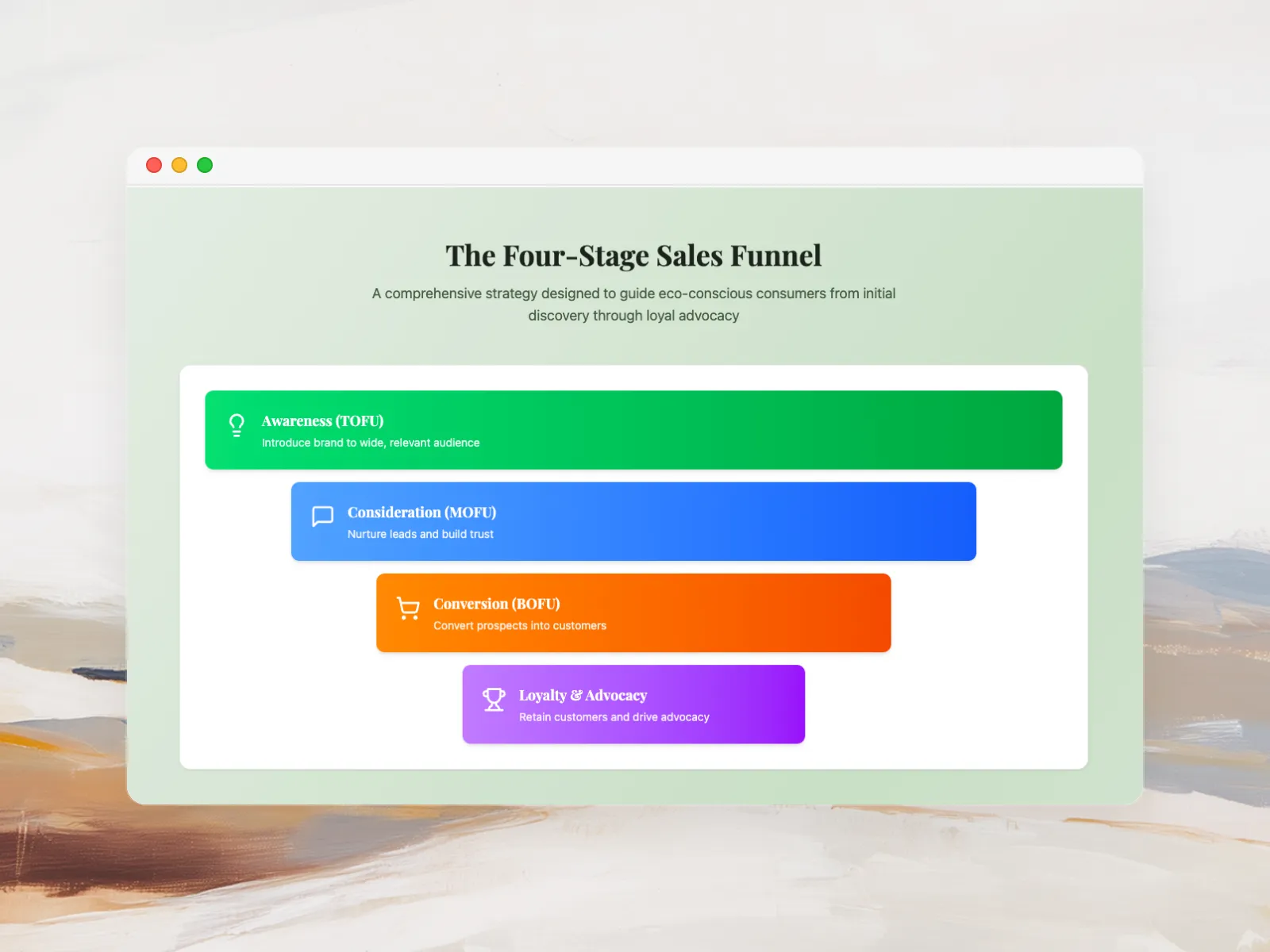
A sales funnel isn’t just a marketing term; it’s a representation of your customer’s path from initial awareness to becoming a paying client. This journey often involves several distinct stages: Awareness, Interest, Desire, and Action. A Sales Funnel Builder helps visualize these stages, allowing you to design specific content and offers for each step. For example, at the Awareness stage, you might offer a free e-book. In the Interest stage, a webinar could be effective. The Desire stage might feature customer testimonials, leading to an irresistible offer at the Action stage.
I’ve seen firsthand how a well-structured funnel can clarify customer intent. Without a builder, these steps can feel abstract. With it, you drag and drop elements, connect pages, and set up automation rules. This makes the entire process logical and measurable. Understanding where your customers are in their journey allows for highly personalized communication, which is a significant factor in driving conversions. It’s about meeting them where they are and guiding them thoughtfully.
Strategic Implementation of Your Sales Funnel Builder
Building a funnel is more than just connecting web pages; it’s about strategic thinking. The most effective funnels I’ve crafted began with a deep understanding of the target audience and their pain points. Using a Sales Funnel Builder, we implement strategies like lead magnets, email sequences, and targeted upsells. For instance, a client selling online courses developed a lead magnet offering a free mini-course. This was built and delivered via their funnel builder.
The follow-up sequence was automated, sending relevant content over several days. This strategy nurtured leads, building trust and demonstrating expertise. When the main course offer arrived, conversions were significantly higher than generic advertising. The builder facilitated the entire workflow, from landing page creation to email delivery and payment processing. This integrated approach ensures no lead falls through the cracks, maximizing every interaction.
Optimizing Each Funnel Stage for Peak Performance
Once a funnel is live, the work doesn’t stop. Optimization is an ongoing process critical for increasing conversions. Each stage of your sales funnel has specific goals. For instance, the awareness stage aims for high click-through rates, while the action stage targets high conversion rates. My approach involves rigorous A/B testing. We might test different headlines on a landing page, varying calls to action on an offer page, or experimenting with email subject lines in a nurture sequence.
Data analysis is key here. Tracking metrics like bounce rates, time on page, and conversion rates at each step provides invaluable insights. Are people dropping off at the interest stage? Perhaps the content isn’t engaging enough. Is the final offer page underperforming? Maybe the pricing or value proposition needs adjustment. Small, iterative changes based on data can lead to substantial improvements in overall funnel performance and revenue. This constant refinement is what differentiates good funnels from great ones.
Measuring ROI: The Impact of a Sales Funnel Builder
The true power of a Sales Funnel Builder lies in its ability to provide measurable results. For any business owner, demonstrating a positive return on investment (ROI) is paramount. With a well-implemented funnel, you can track every lead, every conversion, and the revenue generated from each specific campaign. This clarity helps justify marketing spend and guides future strategy. Key performance indicators (KPIs) include cost per lead, conversion rate per stage, average order value, and customer lifetime value.
For one e-commerce client, their funnels consistently delivered a 3x ROI within six months. This wasn’t just hypothetical; it was data-driven. We knew exactly how much was spent on advertising to bring people into the funnel and precisely how much revenue was generated. This transparent reporting fosters trust and allows for agile adjustments to budget allocation. It makes the marketing process predictable and scalable, moving beyond guesswork to data-backed decisions.


